CSET Annual Report
Annual Report 2025
Each year, CSET’s annual report highlights our work and impact across technology and security issues. It shows how our research, convening, and engagement contribute to important policy conversations on emerging technologies.
In 2025, CSET advanced its mission to inform high-stakes decisions through rigorous, evidence-based analysis of the security implications of emerging technologies. Our independent research examines issues at the intersection of technology and security.
Section 1
Letter from the Director
Dear Friends of CSET,
When we founded CSET in 2019, it was Washington’s first think tank focused entirely on security and emerging technology, and it quickly grew to be the largest research organization in the world working on AI policy. At a time when many viewed these areas as niche, we saw an opportunity to invest in issues that we knew would be enormously consequential for the future.
Central to our approach from the beginning has been building an interdisciplinary team with data skills, foreign-language proficiency, national security experience, and deep technical expertise. This has allowed us to be at the cutting edge of emerging tech issues, from our seminal paper on the importance of AI chips, published a year before semiconductor supply chain issues hit the front pages during the pandemic, to our first-of-its-kind look at the future of sophisticated AI agents.
CSET continues to look around corners. In 2025, we published the first in a series of papers drawing on an in-house dataset that revealed new information on how China is modernizing its military. CSET researchers analyzed thousands of procurement documents showing the efforts of the People’s Liberation Army to purchase AI-related goods and services from both its traditional state-owned contractors and newer vendors. Our September 2025 report revealed who showed up in these tender documents. In 2026, we’ve already published the first in a series on what the PLA was seeking to purchase. CSET is using the PLA’s own contracting records to assess what China is going to do before they do it.
In the summer, CSET hosted a closed-door workshop on the automation of AI R&D, a topic that is increasingly central in conversations among AI insiders but is largely absent from policy conversations. Against a backdrop of strong disagreement between experts, we identified areas of unexpected consensus, clarified points of true divergence, and mapped what further data is needed to fully appreciate the implications of AI R&D automation. This foundational work positions CSET to provide technical expertise to policymakers as AI R&D automation efforts grow.
Entering 2026, our most recent new initiative is Project ATLAS. ATLAS addresses the proliferation of scientific research that too often exists only in large, messy datasets. Building on our Map of Science and led by our data team, ATLAS will make scientific data more practically useful by using new LLM-based methods to extract research metadata, organize and describe the global scientific landscape, and identify emerging areas of activity. ATLAS will be a tool for researchers, practitioners, and policymakers to find signals of new scientific or technological applications and plan for the future.
These are a few examples of CSET’s work over the past year. In the following pages, you’ll read more about our pioneering research and impact.
On a personal note, it has been an honor and a joy to step into the role of Executive Director over the past six months. We took the opportunity of this leadership transition—with Cara LaPointe also joining as our new Director of Analysis in the fall—to take time for a strategic review of where we are and what we want to do next. I’m excited about the research priorities we’ve identified for the coming year, where we believe focused investment will have outsized impact: doubling down on analyzing the U.S. and Chinese tech ecosystems, continuing our pioneering work on how the U.S. can responsibly adopt AI for national security missions, investing in Project ATLAS to draw insights from data about scientific progress, and expanding our focus on the security and governance implications of progress at the frontier of AI.
Drawing on the experience, expertise, and energy of our dedicated researchers, we will tackle these big questions and work to inform high-stakes decisions from D.C. to San Francisco and beyond.
We can’t do it without your support. Thank you for your help in making CSET’s work possible.
Sincerely,

Section 2
CSET in the Media
CSET researchers contributed timely analysis and commentary across leading publications, helping shape public conversations on emerging technology and national security.



“Our data leaves little doubt that military-civil fusion is no longer an aspiration in Beijing—it is a reality. Unless the United States adapts its policies to that reality, it may find itself facing a PLA that is not only better armed but also better networked into the engines of civilian innovation.”


“Collecting better biological data, and running it through AI might be the difference between managing a really small disease outbreak and letting it spread and become a much bigger problem.”




“Companies that invest in augmenting human work, respect creative rights, and prioritize transparency in AI deployment will be better positioned to attract top talent and earn long-term trust. In the decade ahead, speed alone won’t define the AI winners—the edge will go to those who treat human capital as a strategic asset.”

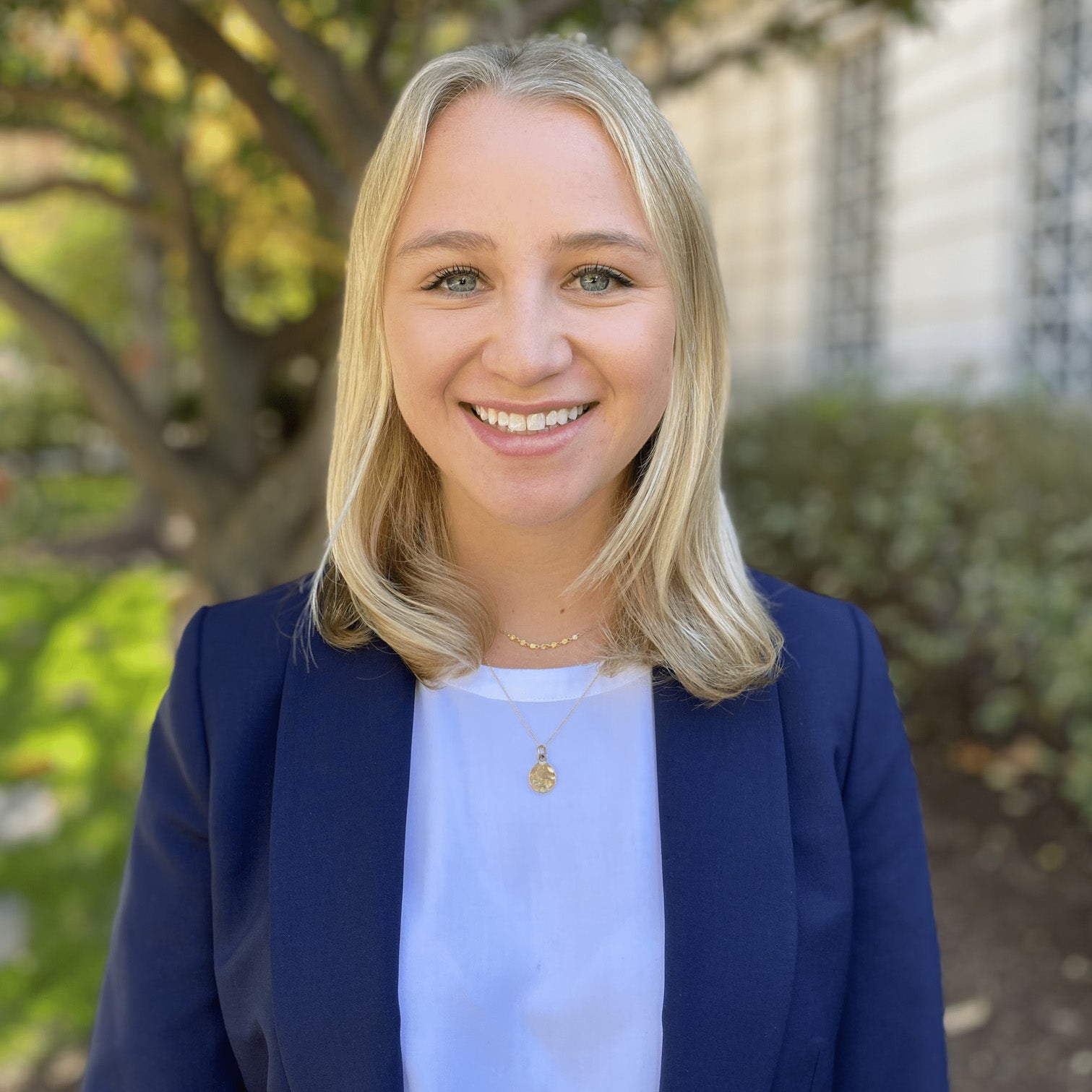
“China is working hard to build up its semiconductor fabrication capabilities and capacity; however, it still lags significantly due to constraints imposed by U.S. and allied export controls on semiconductor manufacturing equipment.”

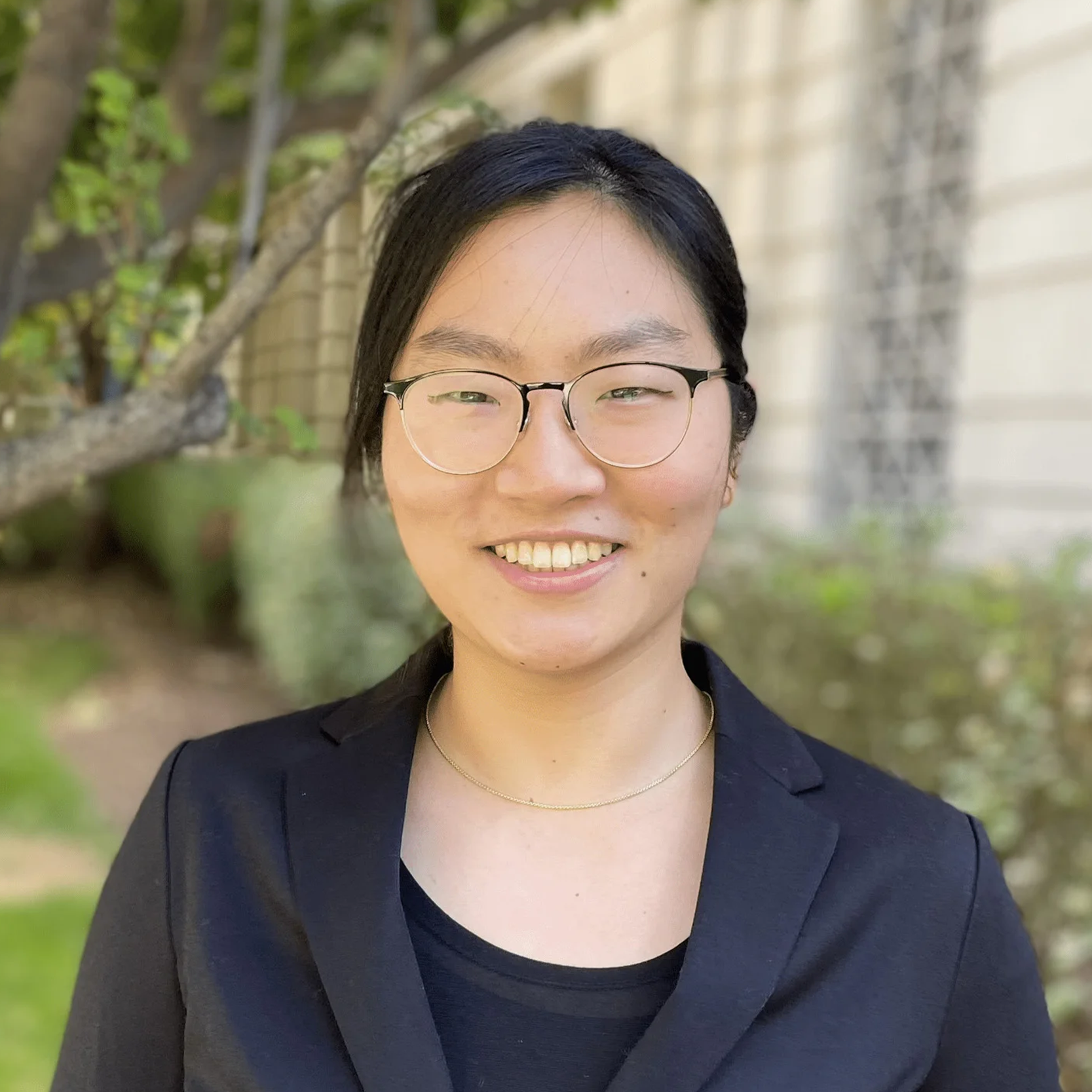

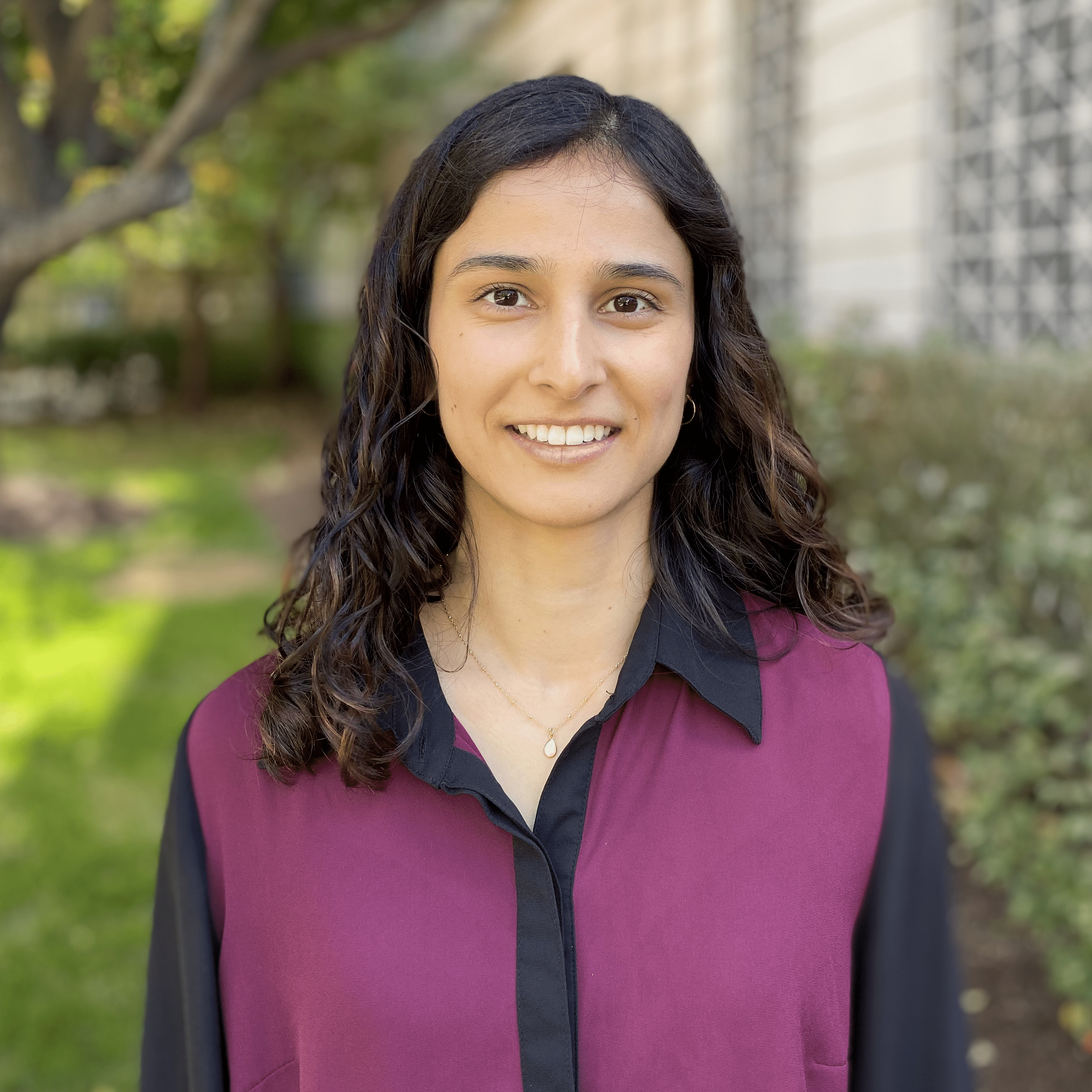
“If Congress imposes this moratorium [on states regulating AI], it will effectively shoot itself in the foot by stifling U.S. AI innovation and even endangering national security. The reality is that AI governance infrastructure is necessary for both objectives, and states are well-equipped to contribute to infrastructure — indeed, they are already building it.”


“U.S. investment in low-cost drones is still at least an order of magnitude too small.”


“There are aspects of the [Trump administration’s AI] Action Plan that many of us see as quite promising in terms of recommendations that we previously made to the government… The major challenge here is going to be implementation.”

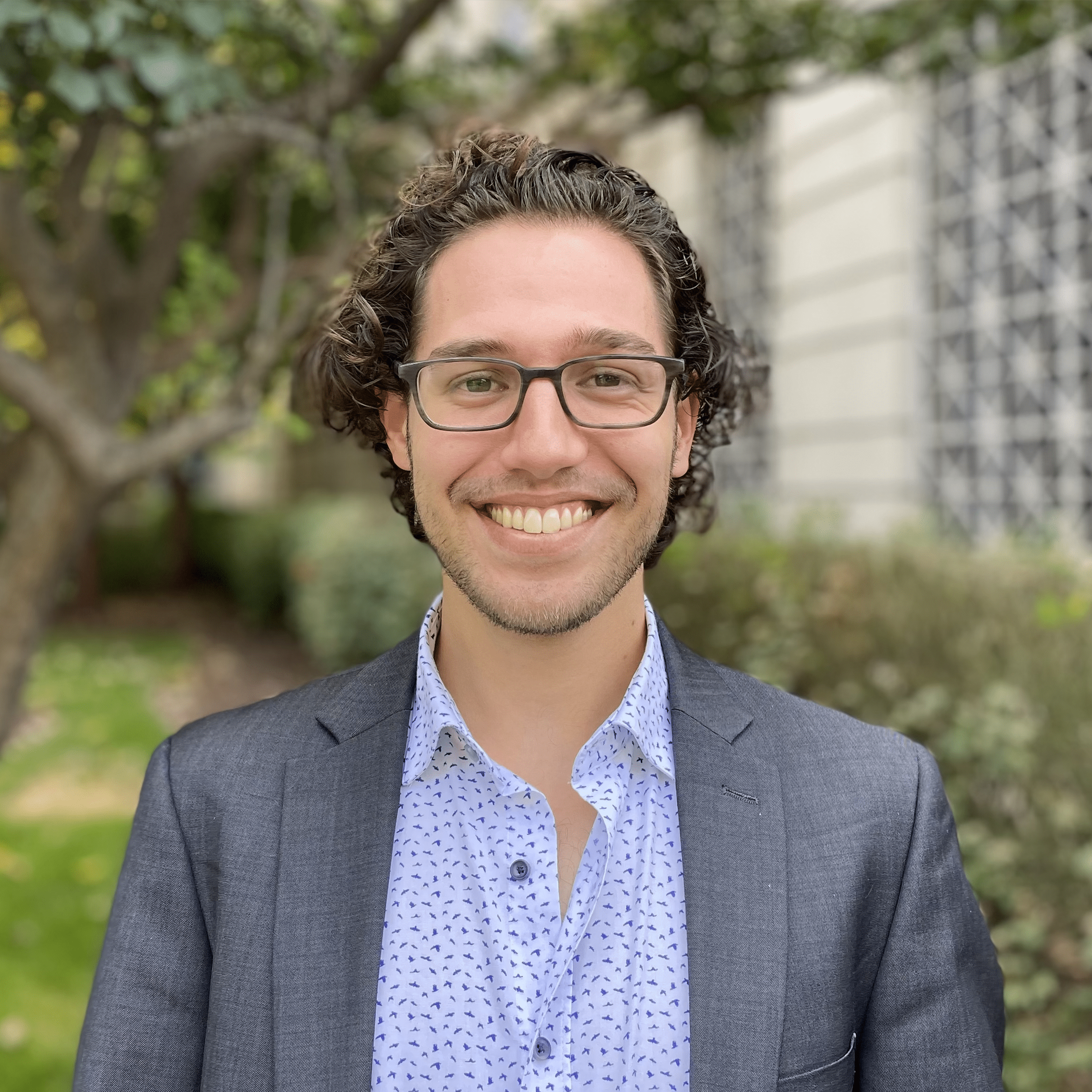
“Compute has been more skewed toward training in the past, and in the coming years, it’s going to shift much more toward inference, as demand for these AI services grows.”

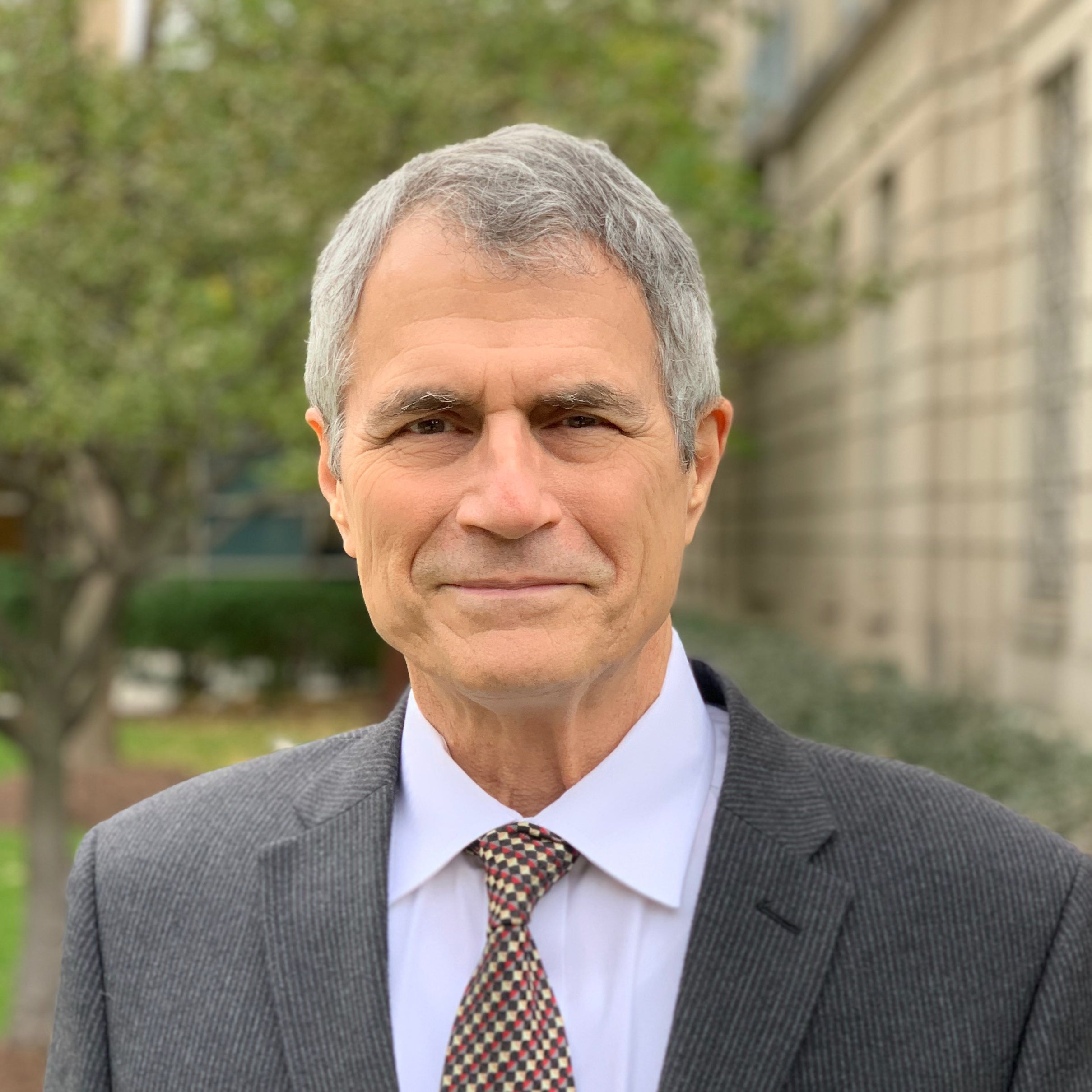
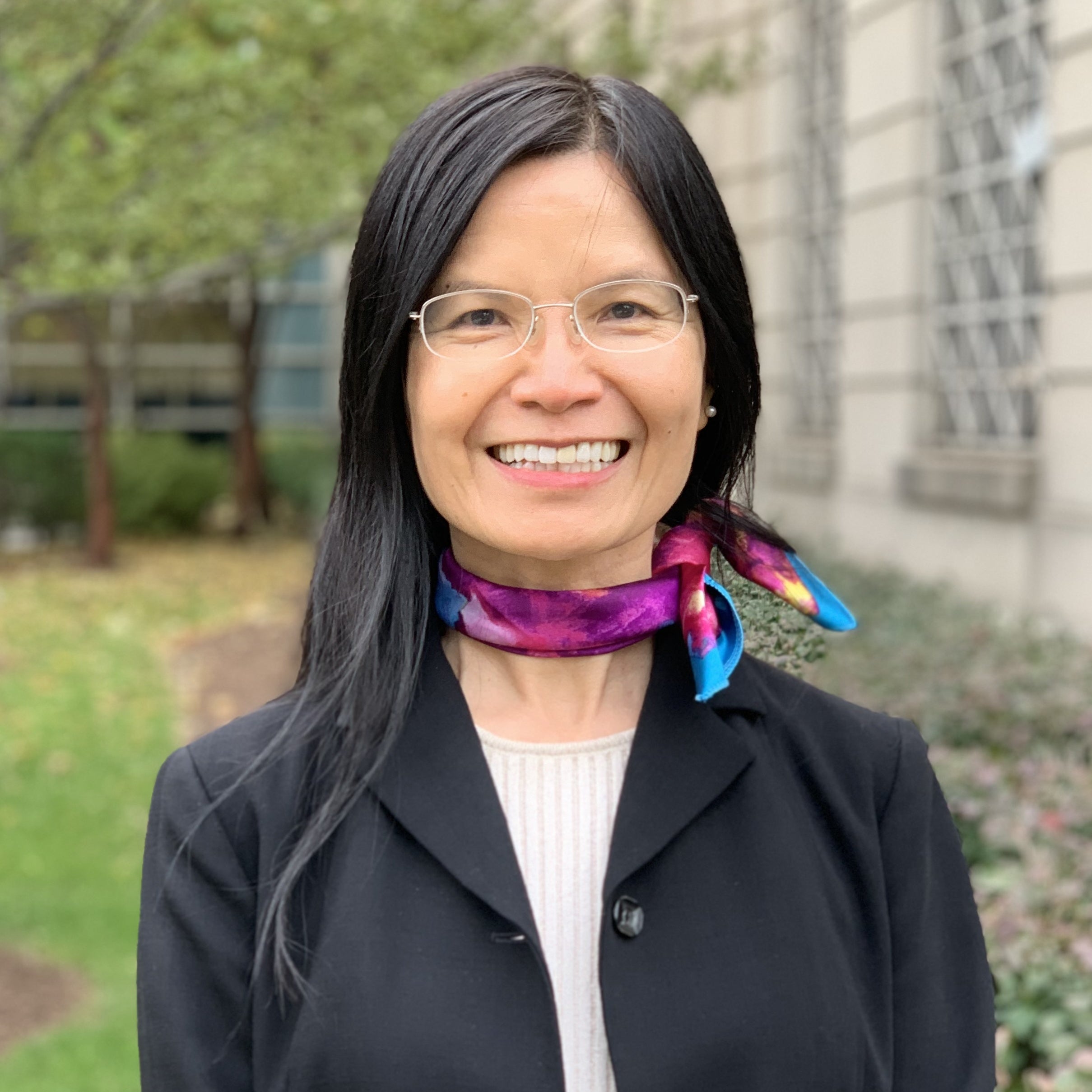
“[I]t’s fair to say that the DeepSeek surprise opened Western eyes but also closed them. While we now take Chinese AI seriously, we imagine that large statistical models – DeepSeek being one of them – are the only Chinese path to AGI, when there are several typologically different approaches seriously pursued there.”
Section 3
Highlights of 2025
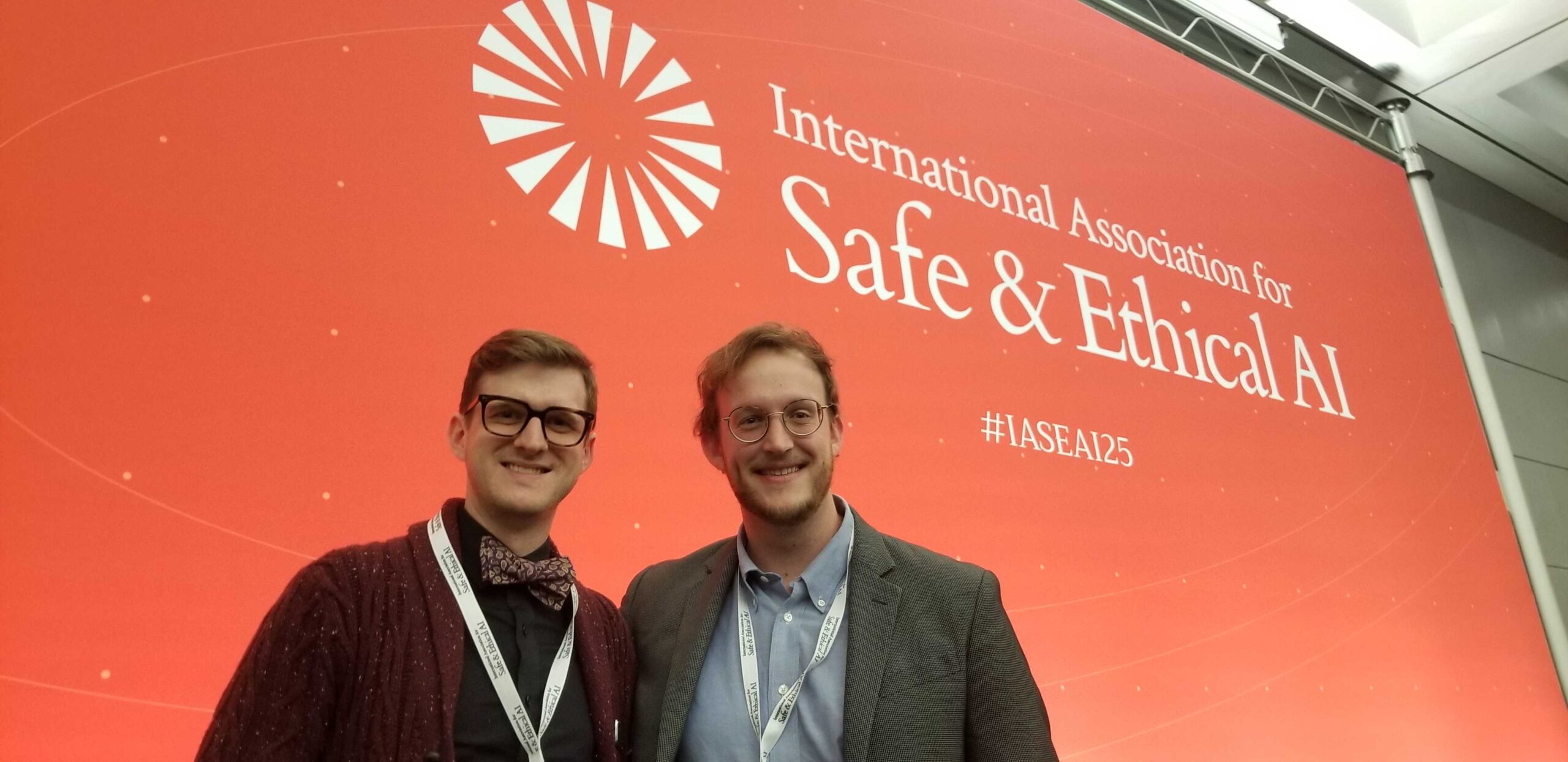
February
Colin Shea-Blymer, Owen Daniels, and Mia Hoffman attended an International Association for Safe and Ethical AI conference.
March
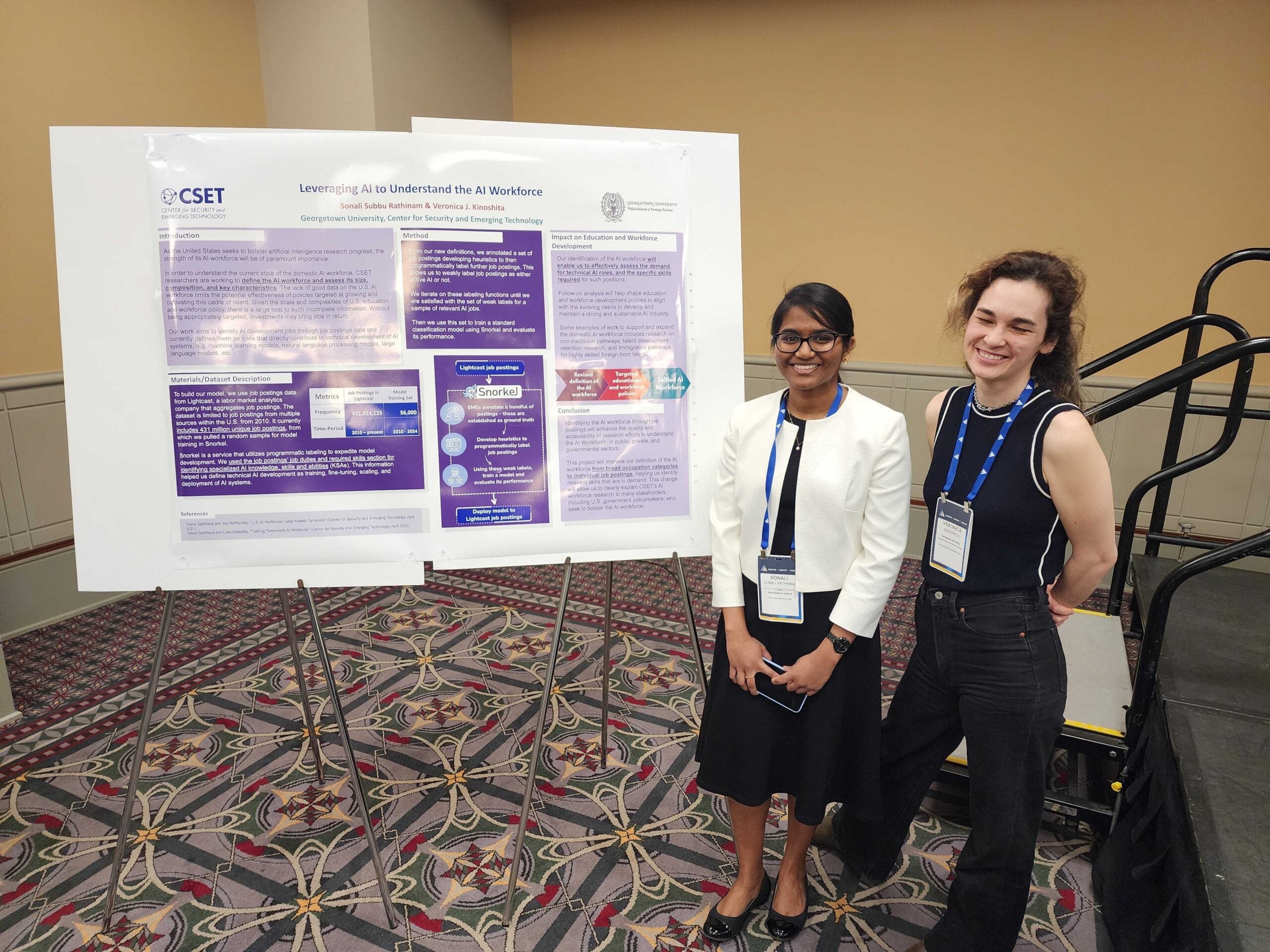
Sonali Subbu Rathinam, Ronnie Kinoshita, Adrian Thinnyun, and Mina Narayanan presented their research at an Association for the Advancement of Artificial Intelligence workshop.
March
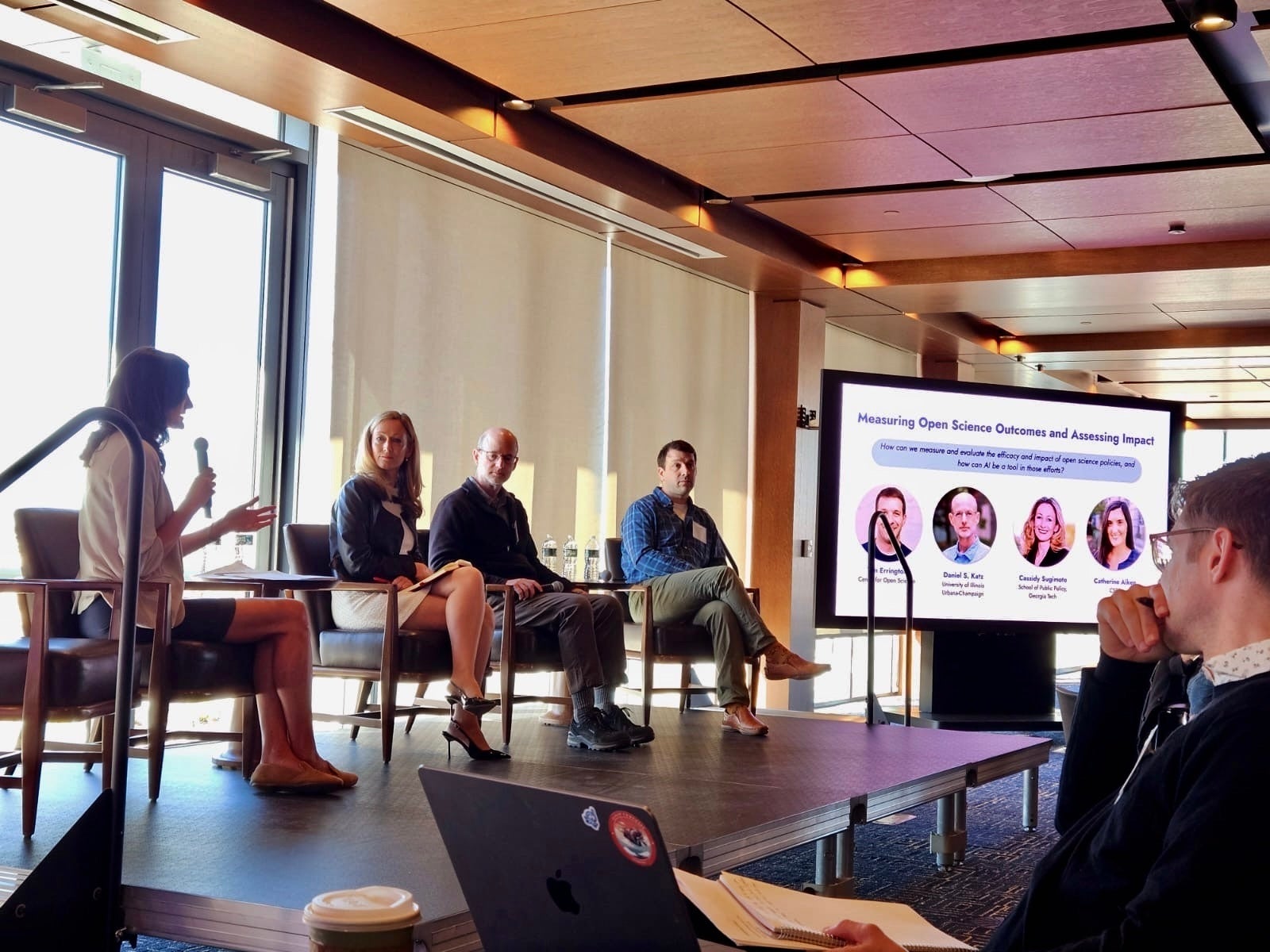
CSET hosted a workshop, Opportunities in Open Science, Metascience, and AI, organized by the CSET data team.
April
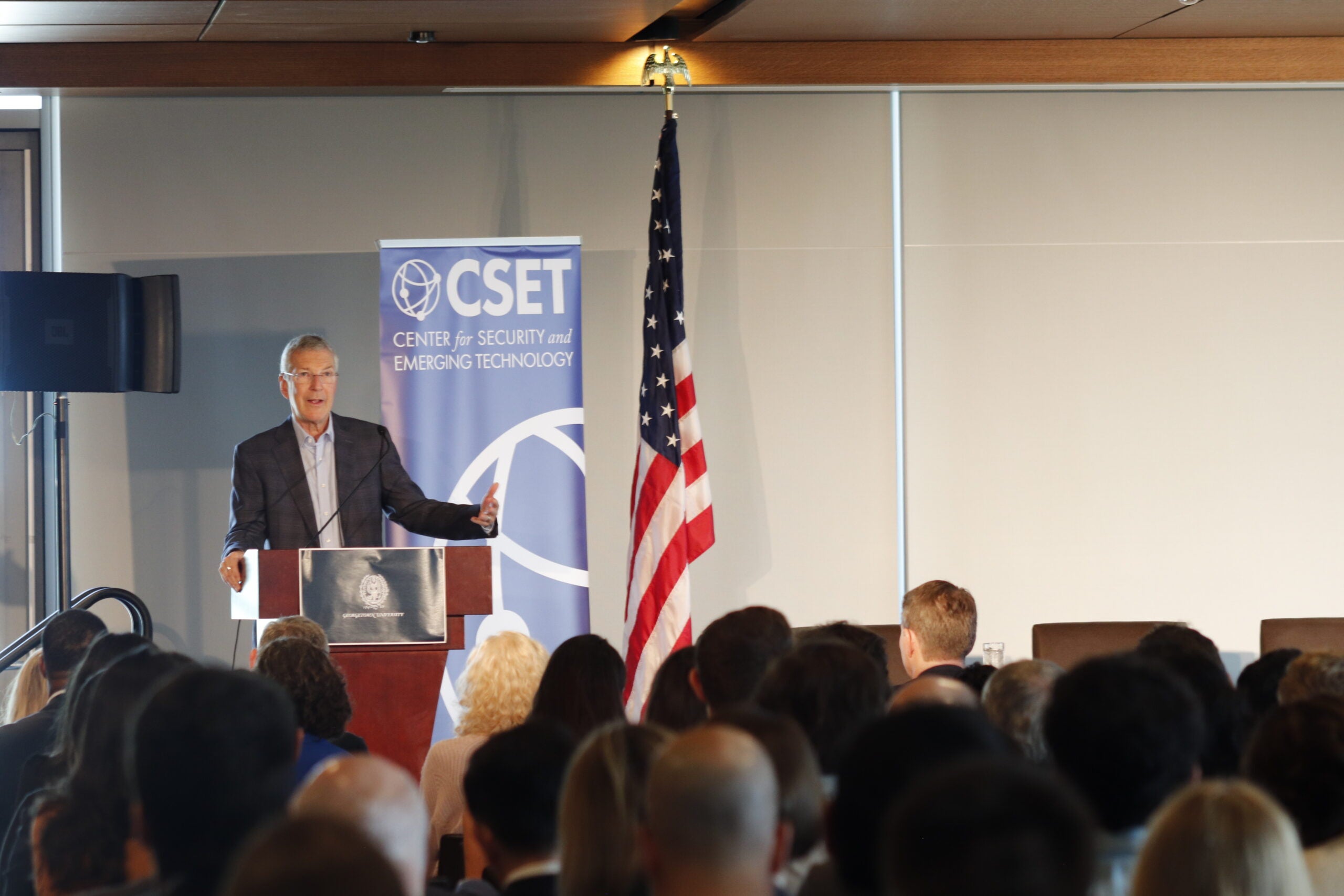
CSET hosted its inaugural Spring Symposium, How the U.S. Wins the Global Tech Competition; former Under Secretary of Commerce Alan Estevez was the keynote speaker.
May
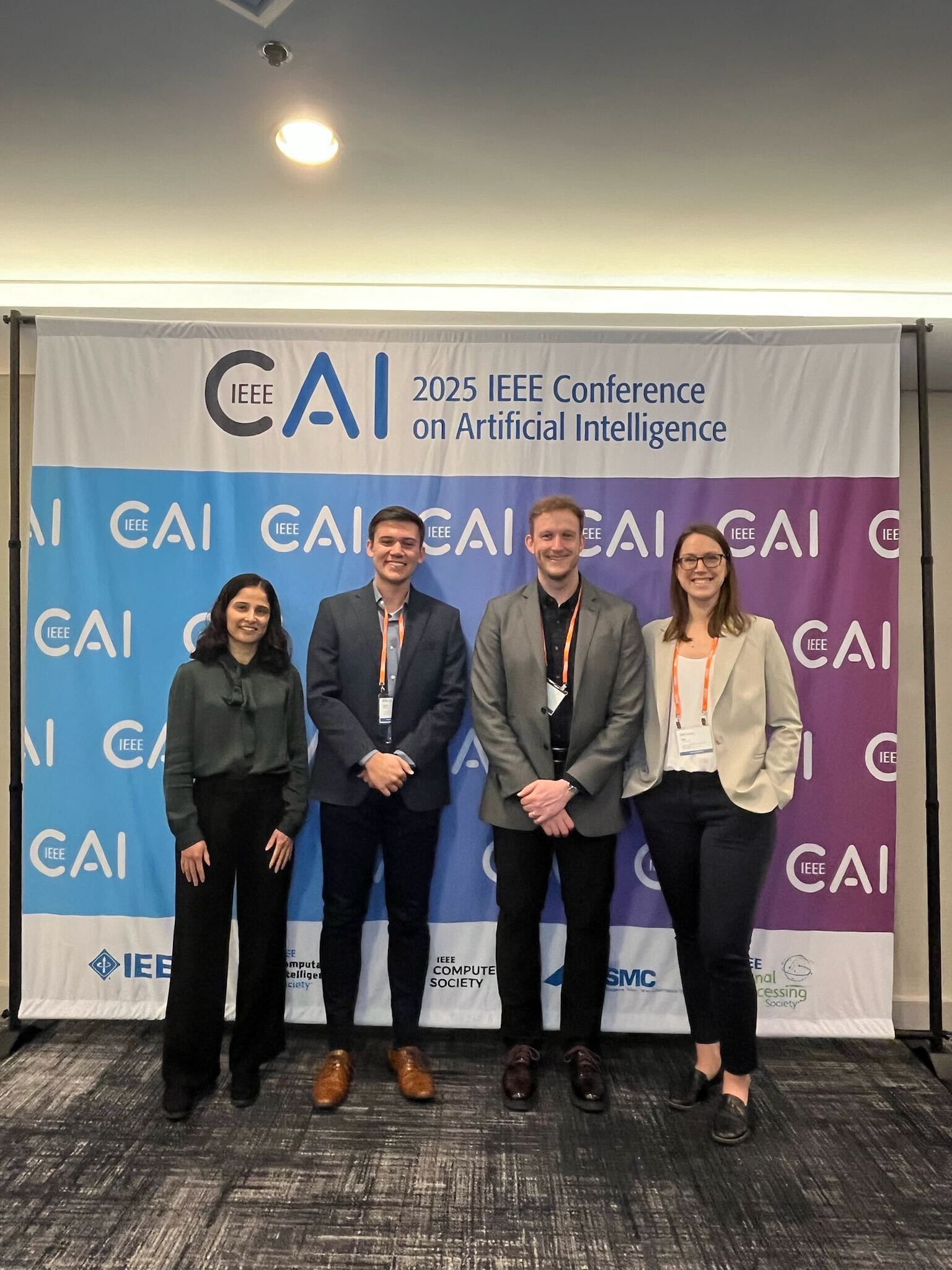
Mina Narayanan, Cole McFaul, and Mia Hoffman presented their research at the Institute of Electrical and Electronics Engineers Conference on AI, with Owen Daniels (center right) in attendance.
May
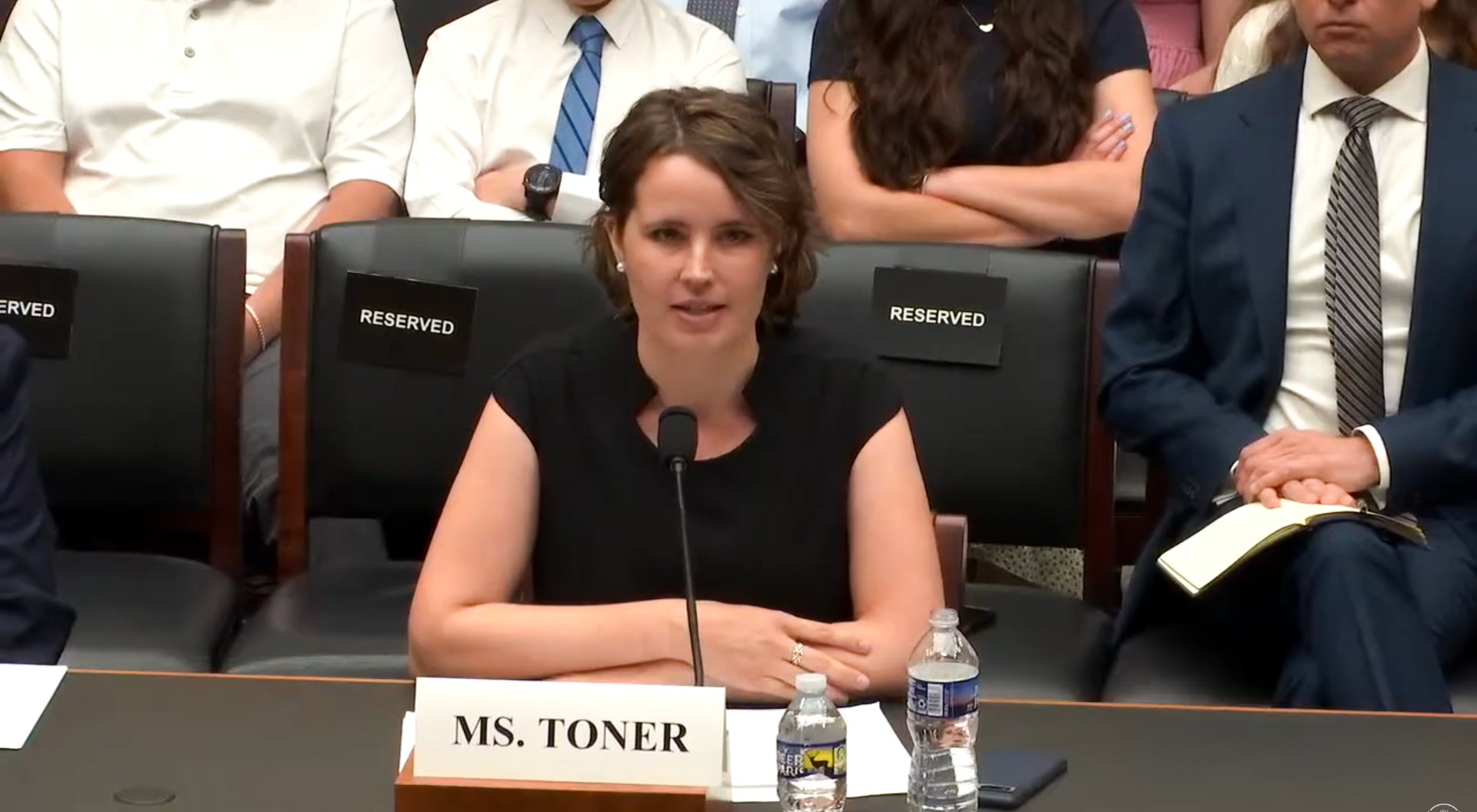
Helen Toner testified on the role of trade secret protection in U.S. AI development before the House Judiciary Subcommittee on Courts, Intellectual Property, Artificial Intelligence, and the Internet.
May
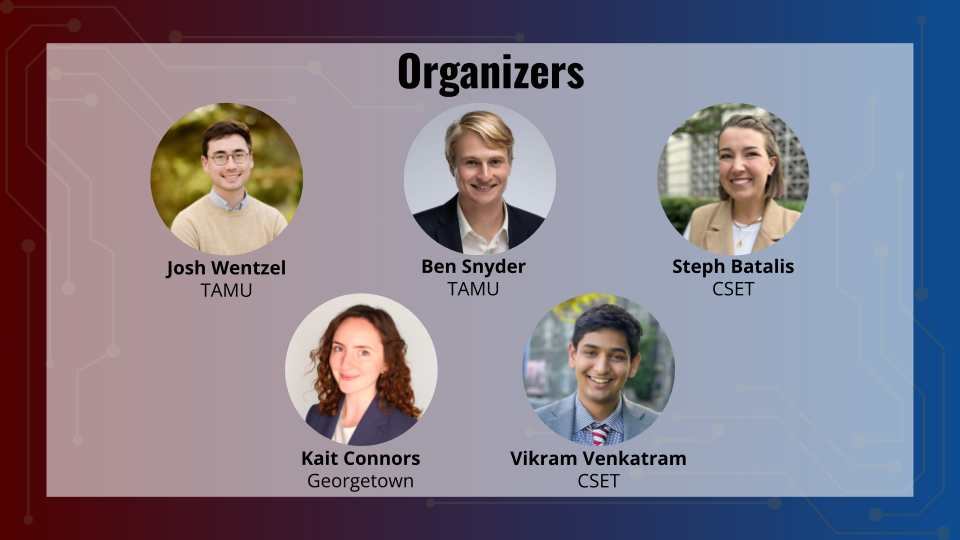
Steph Batalis and Vikram Venkatram helped organize a workshop, Violet Teaming AI-Enabled Biosurveillance, co-hosted by CSET and Texas A&M’s Biosecurity and Pandemic Policy Center.
July
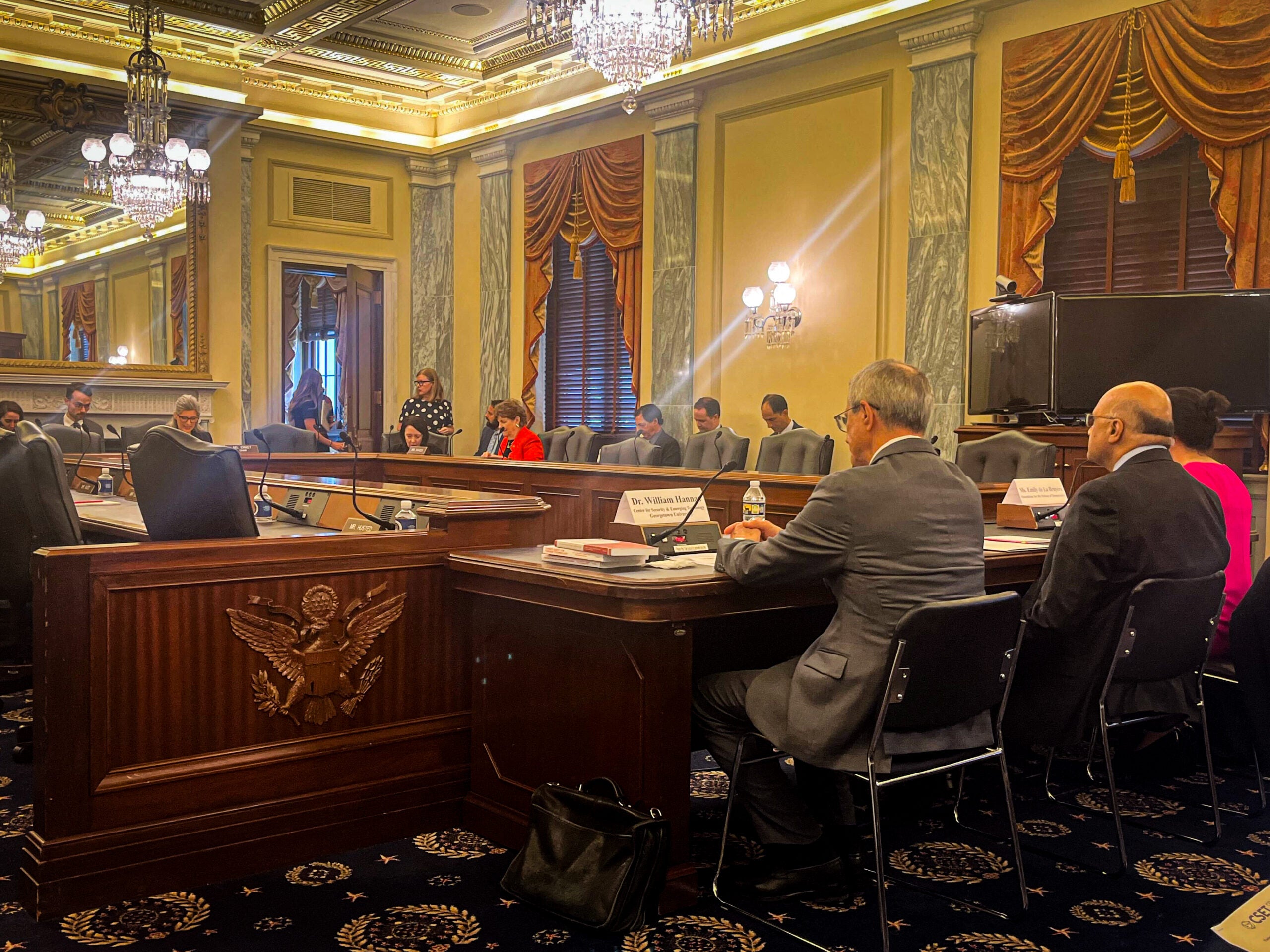
William Hannas testified before the Senate Small Business and Entrepreneurship Committee on the topic of Chinese technology transfer.
July
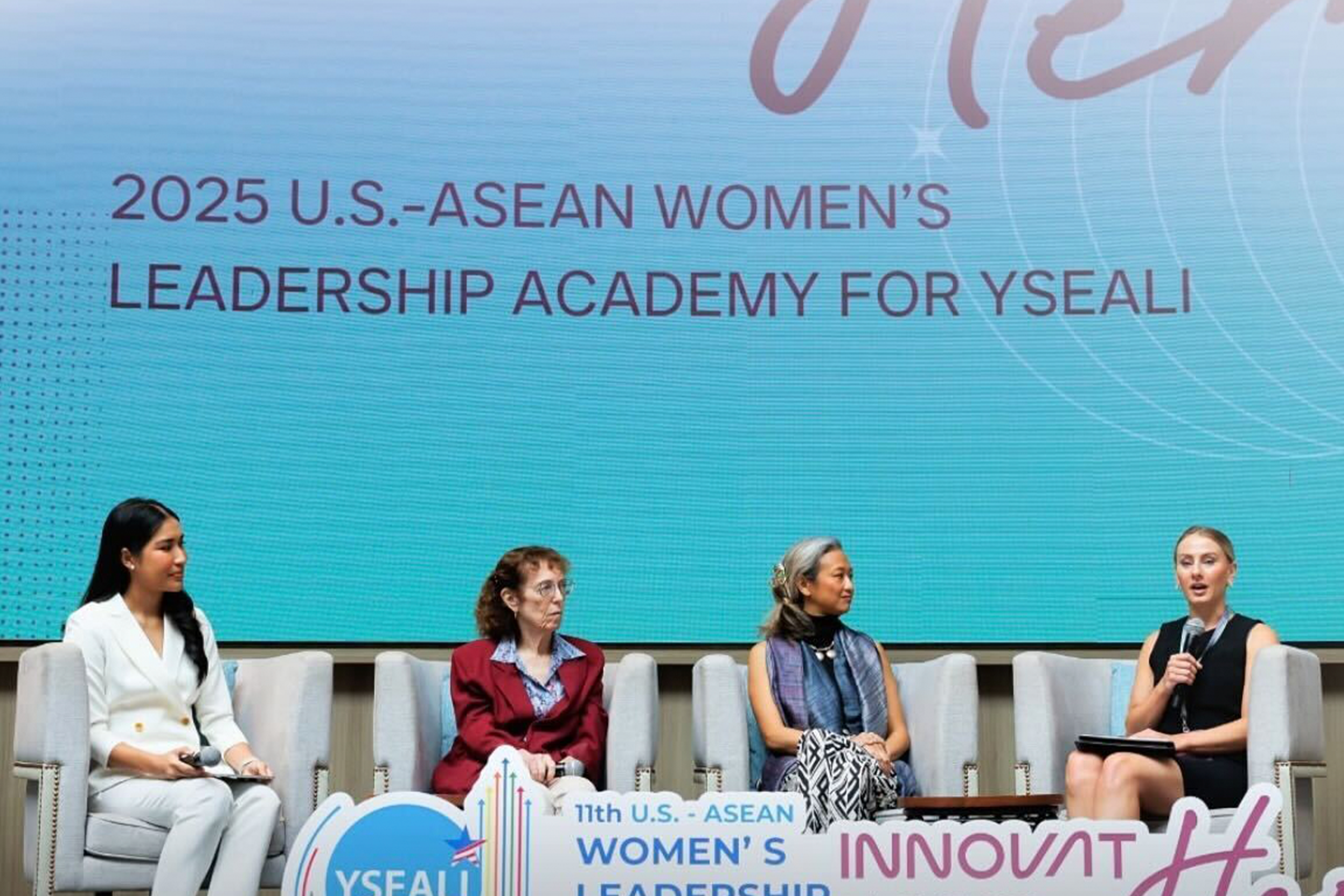
Ali Crawford delivered the keynote address and participated in a panel at the 2025 Young Southeast Asian Leaders Initiative Women’s Leadership Academy.
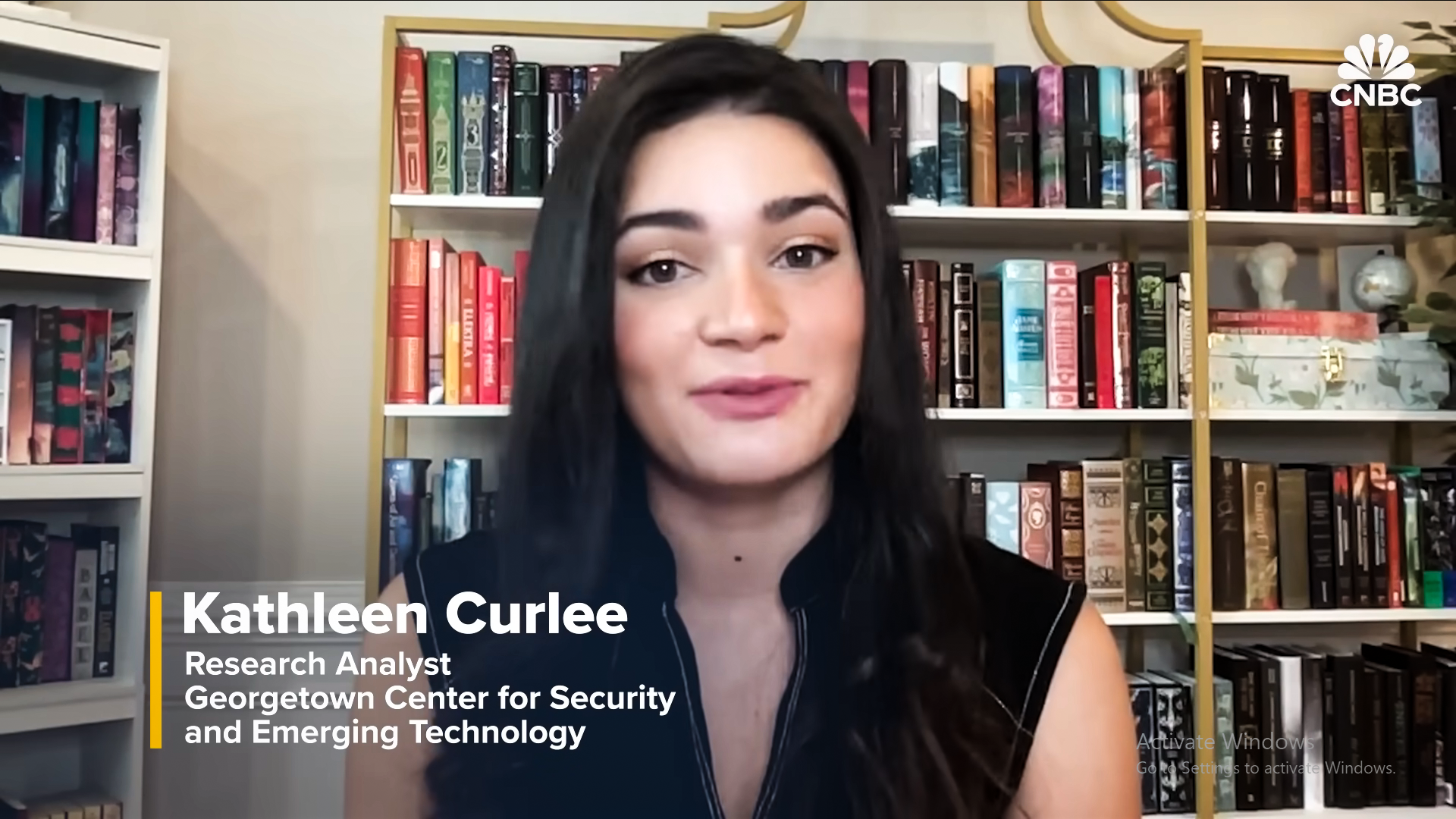
August
Kathleen Curlee was featured in a CNBC mini-documentary about SpaceX.
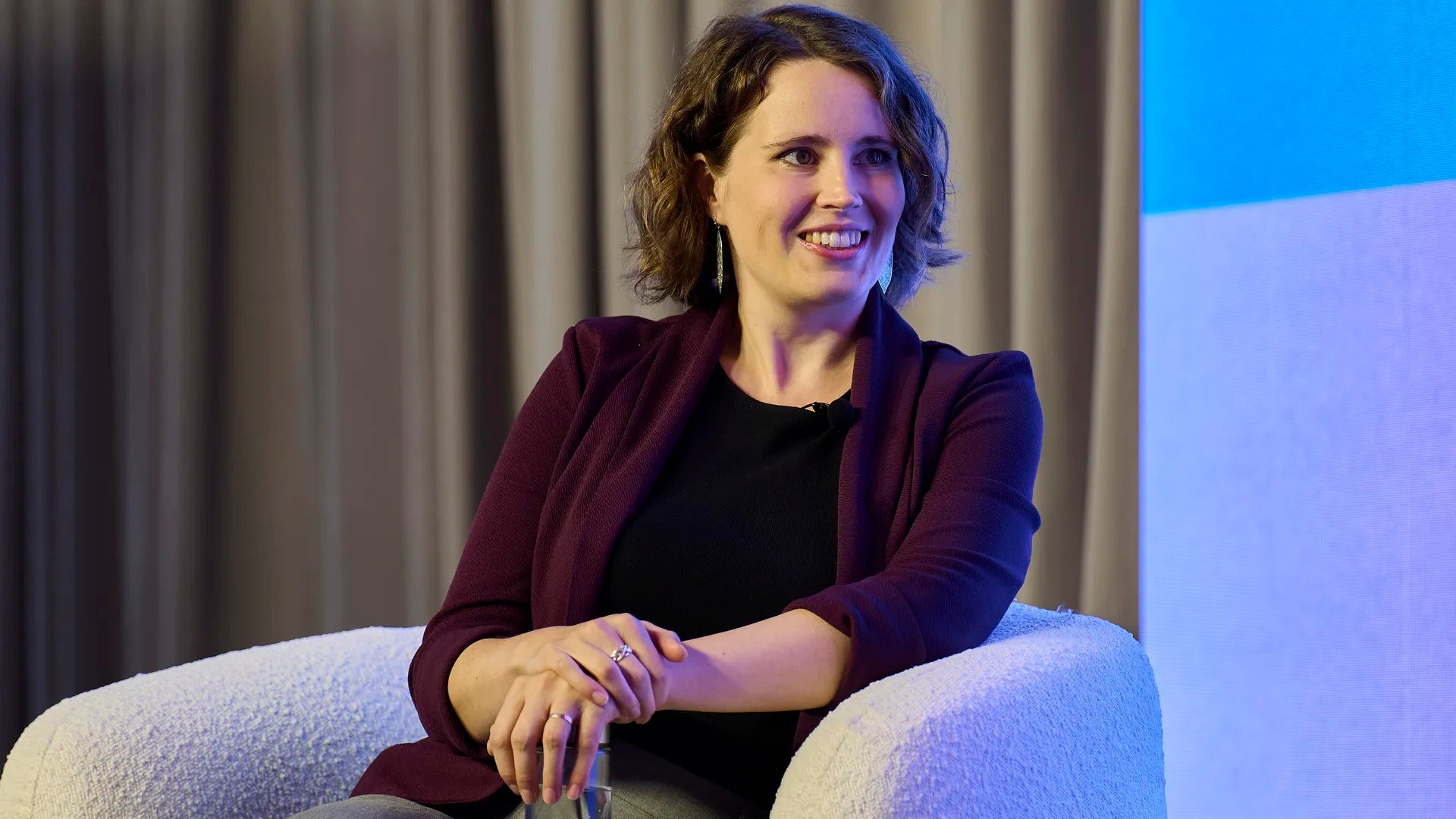
September
Helen Toner, who helped found CSET, was named Interim Executive Director.
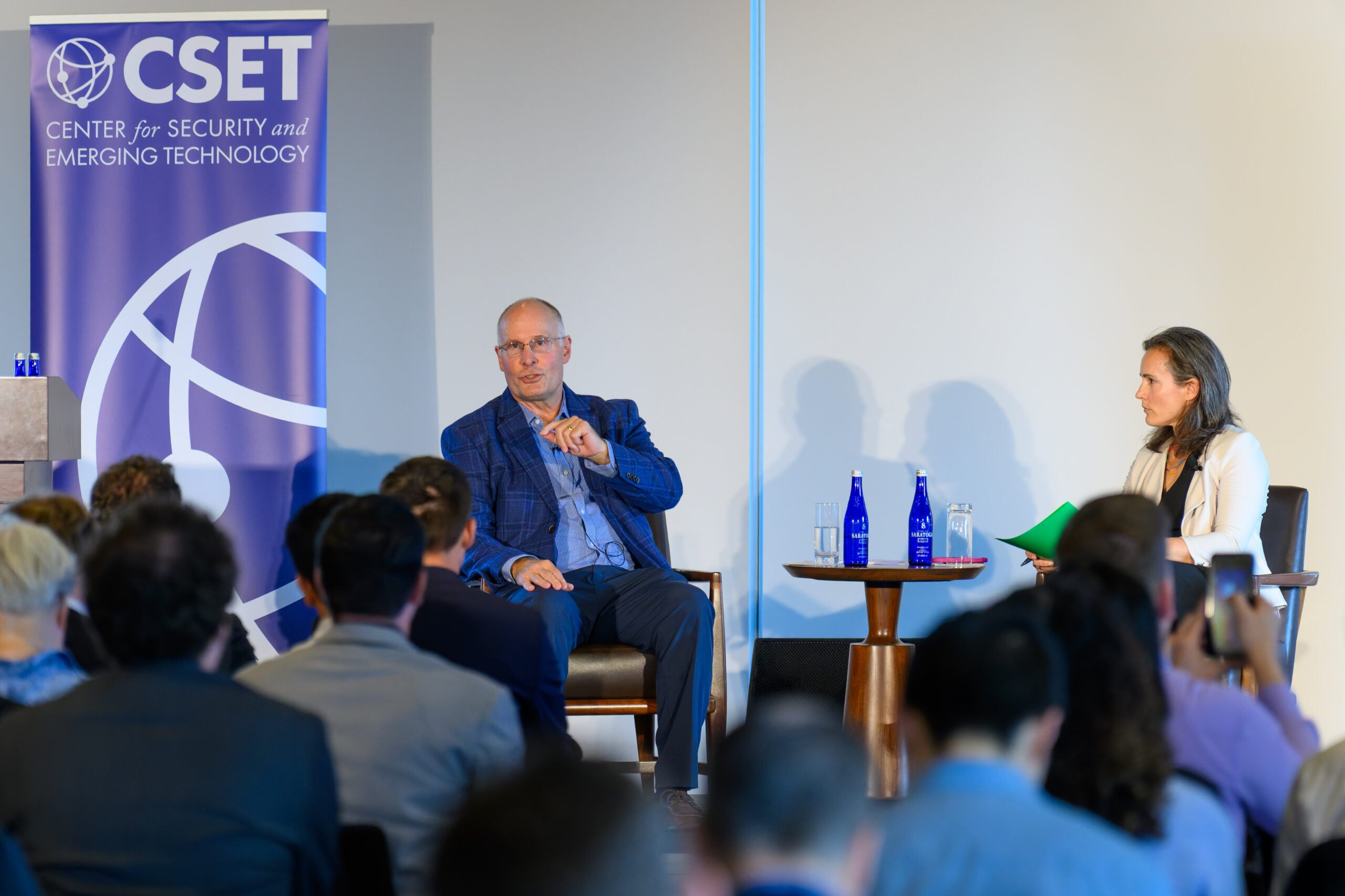
October
CSET hosted a conference, China’s AI Leap, based in part on a CSET report, Pulling Back the Curtain on China’s Military-Civil Fusion, which was an exclusive feature in The Wall Street Journal ; Congressman John Moolenaar (pictured with Emmy Probasco) was the keynote speaker.
October
The CSET Advisory Board was launched with six founding members: the Honorable Alan Estevez, Joel Meyer, Lauren Bedula, Michael Brown, Michael Howard, and the Honorable Dr. Sarah Sewall.
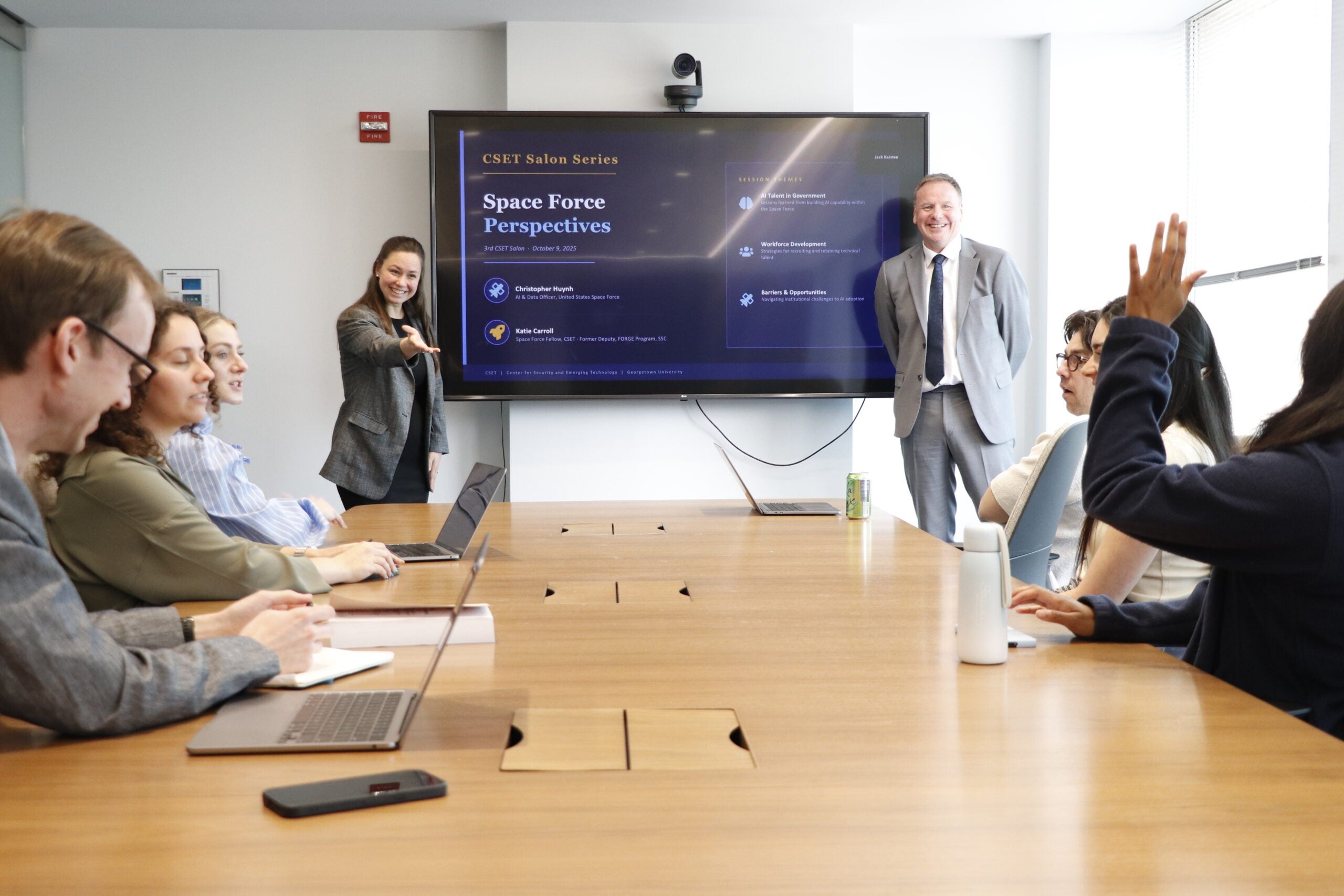
October
Maj. Katherine Carroll presented on AI talent in the U.S. Space Force as part of the workforce team’s CSET Salon series.
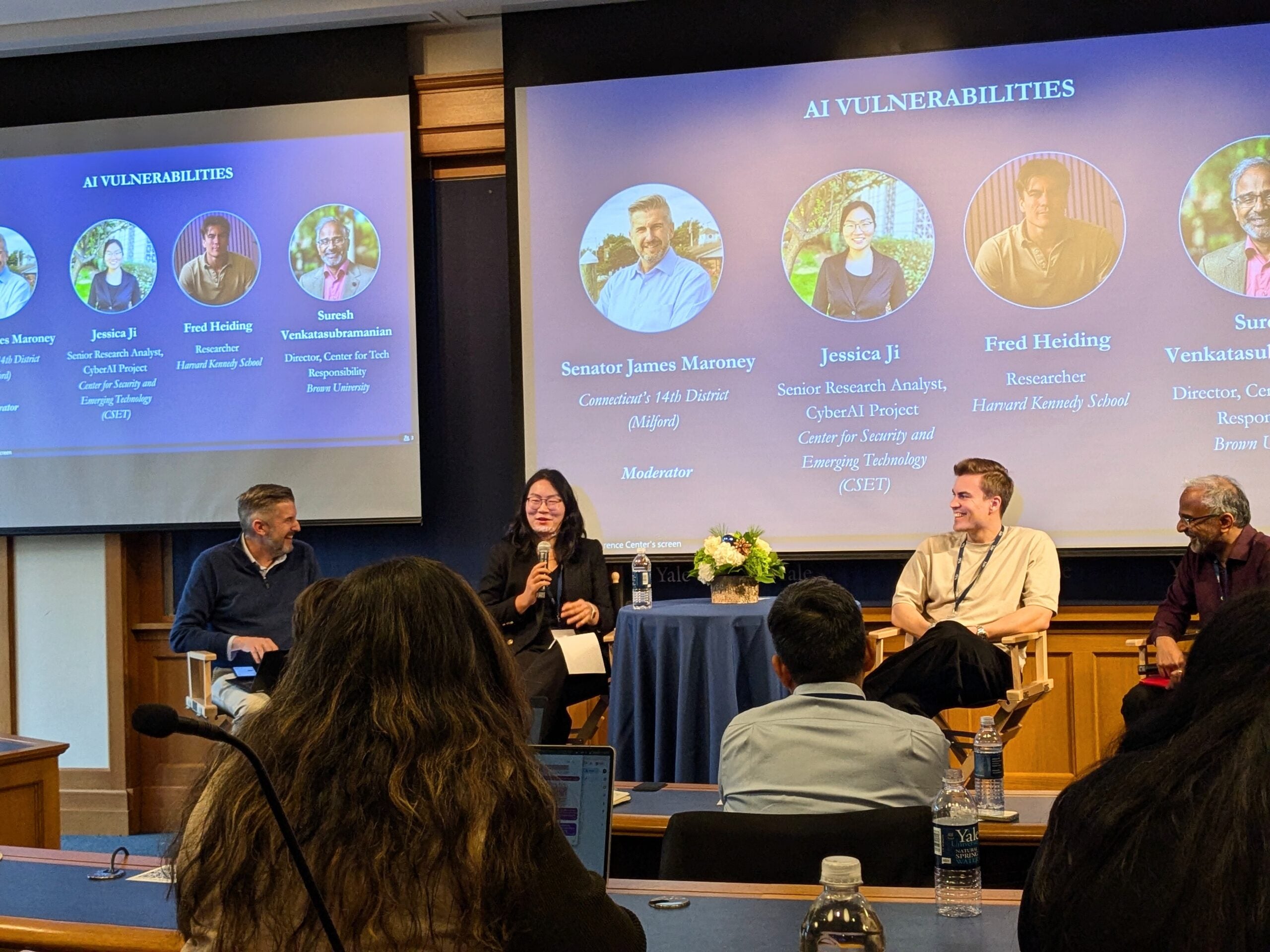
December
Jessica Ji participated in a panel at the Digital Vulnerabilities in the Age of AI Summit.
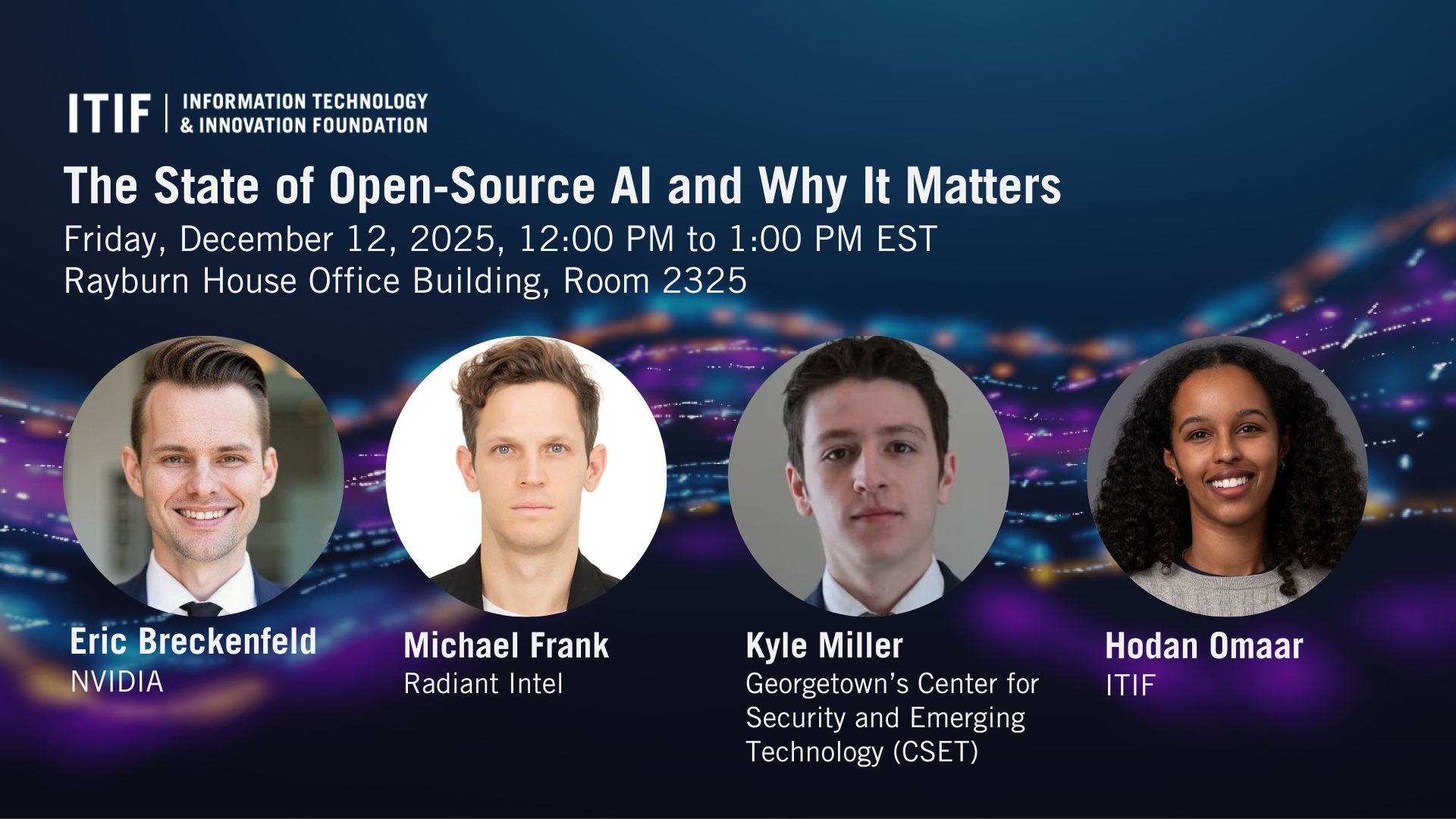
December
Kyle Miller participated in an Information Technology & Innovation Foundation panel, The State of Open-Source AI and Why It Matters.
Section 4
Research
As AI dominates news headlines day after day, CSET has kept pace by providing rigorous analysis on topics ranging from the intersection of AI and biotechnology to the future of U.S.–China tech competition. Our experts are known for the depth and integrity of their research. They regularly provide briefings to decision-makers at the highest levels and field inquiries from members of the press seeking to better understand what’s at stake as emerging technologies continue to reshape our world.
Applications
Examines how AI is being adopted for national security, including military use and international cooperation.
Explore →CyberAI
Explores how AI is reshaping cybersecurity, cyber operations, and related policy challenges.
Explore →Biotech
Examines biotechnology’s promise, risks, and security implications for policy and public health.
Explore →Data
Public data tools, datasets, and analytic resources to help policymakers track emerging technology trends.
Explore →Governance
Analyzes AI governance, legislation, and policy approaches in the United States and abroad.
Explore →Peer Watch
Examines how other countries use talent, investment, policy, and technology transfer to build strategic advantage.
Explore →Workforce
Studies AI and cyber talent pipelines, labor markets, and policies that shape the future workforce.
Explore →Section 5
Donors
CSET is grateful for the support of those who have made financial gifts in 2025 to sustain our research. We accept funding from parties who share our interest in security and emerging technology and respect our commitment to intellectual independence. Learn more about investing in CSET’s work at cset.georgetown.edu/donate.
Thank you to our donors:
$1,000,000+
$100,000 – $999,999
$15,000 – $99,999
$1,000 – $14,999

If you or your organization are interested in supporting CSET while engaging more deeply with our experts and research, please consider joining CSET Forum.
The Forum is a curated membership program including companies, foundations, and other organizations and individuals. To learn more, visit cset.georgetown.edu/forum.
Section 6
CSET Culture Statement
CSET was formed to examine emerging technology through an evidence-based, data-driven approach independent of government, funder, or ideological perspectives.
CSET staff come from a variety of backgrounds and disciplines, bringing a robust wealth of perspectives and experiences to inform research at the intersection of technology and national/international security. We are committed to fostering a diverse, equitable, and inclusive culture rooted in intellectual curiosity and respect.
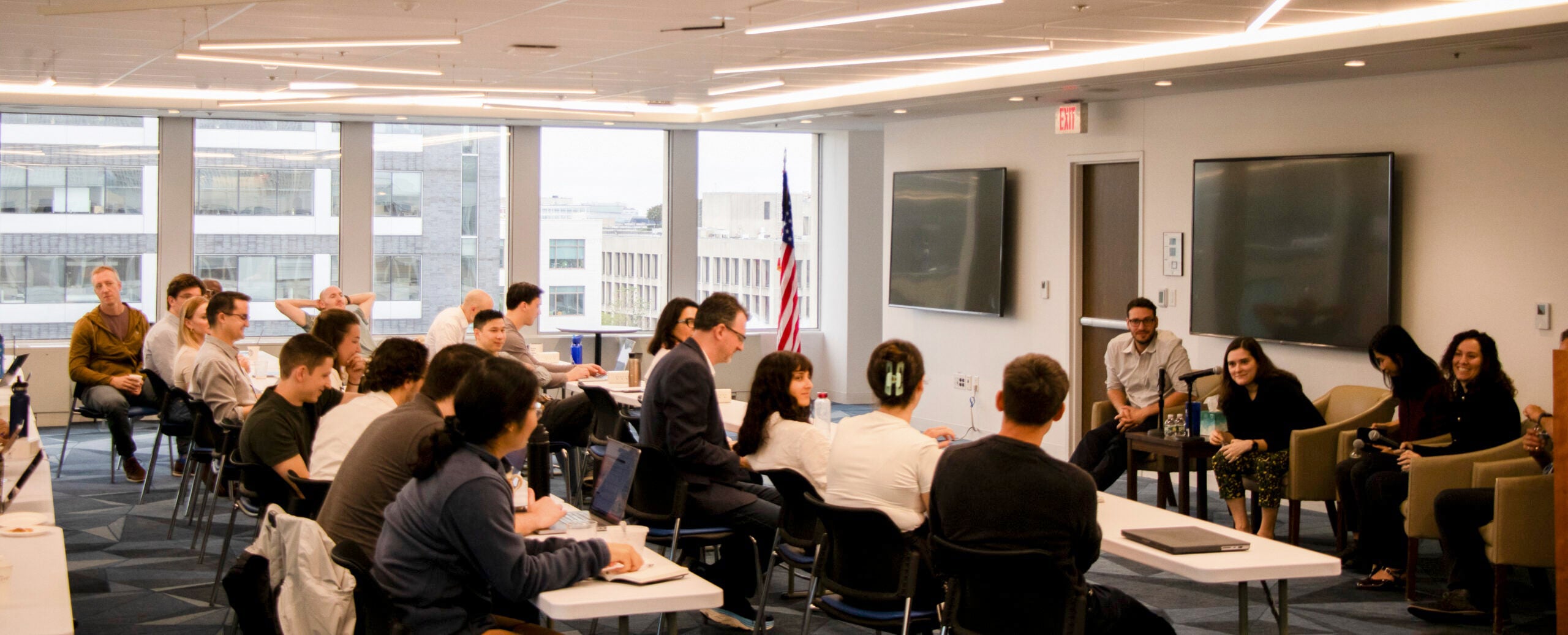
At CSET, we:
- Challenge assumptions, follow the evidence, understand how data can inform decisions, and serve as trusted advisors to the national security community.
- Are lifelong learners who understand that intellectual humility is essential to ongoing growth. We seek and absorb feedback and actively work on self and organizational improvement.
- Celebrate individuality and encourage all team members to welcome one another to create a sense of belonging.
- Collaborate because we know that problems are best solved as a team.
- Are empowered to take agency in the workplace and participate in meaningful decision-making.
- Support and encourage open dialogue across all teams.
- Know that while our work is important, our individual and familial needs come first. We value our time outside of work, respect a healthy work/life balance, and support one another in times of need.
- Measure our success as a team.
- Place acting with integrity and respect above all.